ServiceTitan Pantheon AI booking, ServiceTitan AI tools, AI booking software for ServiceTitan, AI scheduling ServiceTitan
5 min read
Going to ServiceTitan Pantheon? A Practical Checklist for Evaluating AI Booking

October 7, 2026




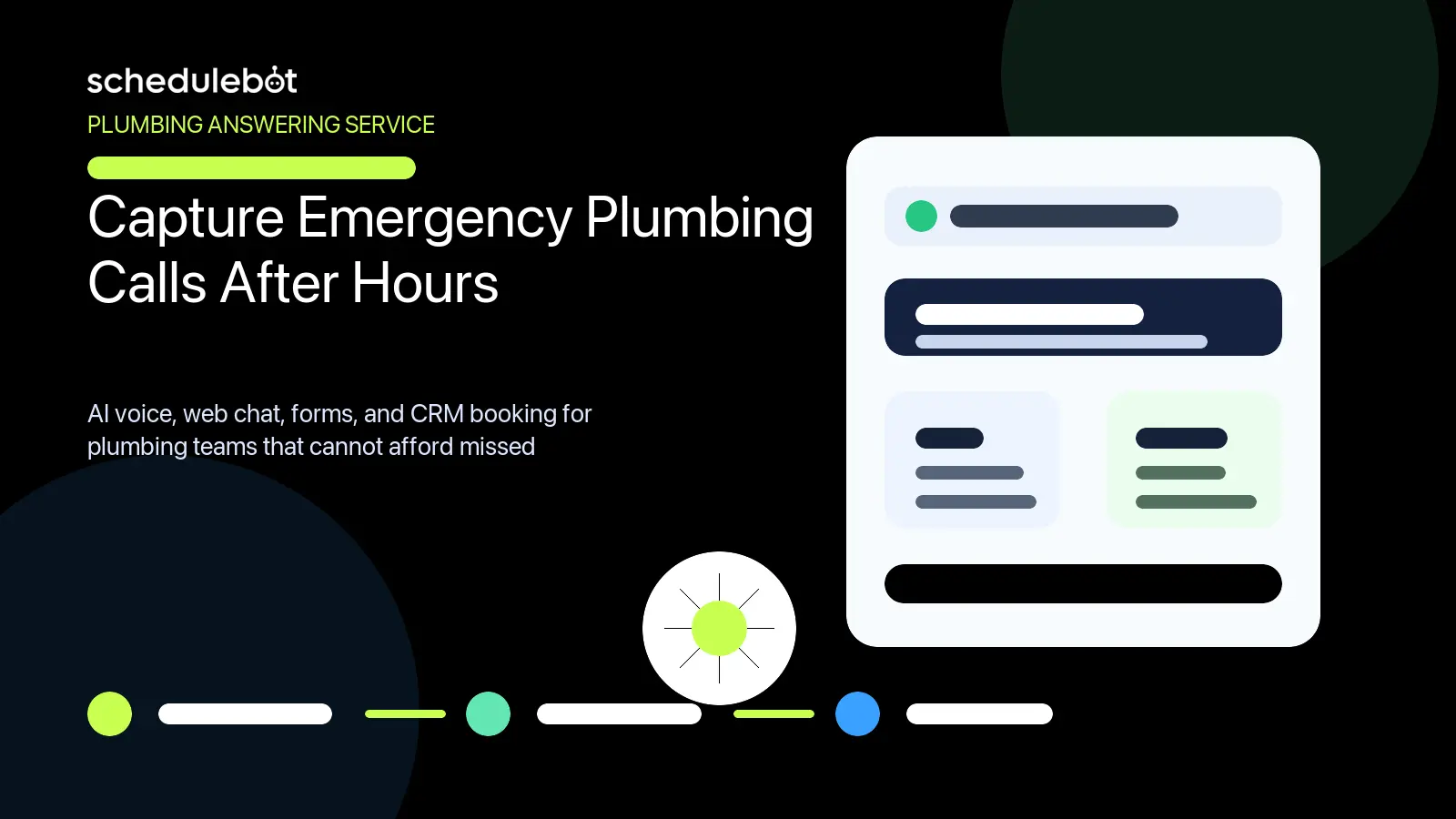
A plumbing answering service helps contractors answer emergency calls, qualify the issue, and move the customer toward a booked job after hours, during overflow, or when the office is short-staffed. The best plumbing setup combines AI voice, call routing, web chat, forms, SMS follow-up, CRM availability, and emergency escalation rules.
Plumbing calls are different from many other home-service calls because the customer often has an active problem. Water is leaking. A drain is backing up. A water heater is out. A sewer issue is getting worse. If that customer reaches voicemail or waits until the next morning, they may call the next plumber on Google.
That is why a plumbing answering service should do more than pick up the phone. It should understand urgency, collect the right details, check service area, route true emergencies, and create a clean path to scheduling. For mid-market plumbing companies, that is where call answering starts to become revenue protection.
A strong plumbing answering service covers the first mile of intake. It answers the call, identifies whether the customer needs emergency repair, drain cleaning, water heater service, sewer work, leak detection, estimate help, maintenance, or another request, then moves the call into the company's preferred next step.
For plumbing companies, context matters. A burst pipe, slow drain, slab leak, no-hot-water call, commercial account, and replacement estimate should not all follow the same script. The answering workflow should account for job type, service area, business hours, urgency, branch rules, and whether the customer needs immediate escalation or normal scheduling.
Traditional answering services can still be useful for basic coverage, but many stop at message taking. That leaves the office to call back, re-ask questions, check availability, enter the customer into the CRM, and decide whether the call should have been treated as urgent. A modern plumbing call center workflow should reduce that rework.
Plumbing demand does not respect office hours. Homeowners discover leaks after dinner. Property managers call on weekends. Holidays create water heater and drain emergencies. Marketing campaigns and Google LSA leads can also create bursts of call volume while CSRs are already busy.
The contractor has already paid to create that demand through trucks, brand, reviews, referrals, SEO, LSAs, PPC, and repeat-customer relationships. Letting those calls roll to voicemail turns an expensive lead into a callback race. In emergency plumbing, the company that answers first often gets the job.
The same problem happens across channels. A homeowner may start in website chat because they do not want to call from work. Another may submit an online form after hours. Another may text back from an old estimate or service reminder. If those channels are disconnected from phone intake, the office inherits a messy follow-up queue instead of a clean booking workflow.
An AI receptionist for plumbing answers inbound calls, asks intake questions, classifies the problem, and follows rules the company configures ahead of time. In ScheduleBot, voice can work alongside AI booking forms, website chat, SMS, and missed lead recovery so plumbing companies have one connected path from inquiry to booked job. For how this works across other trades, see our guide to the AI receptionist for home services.
The goal is not to replace judgment on complex calls. The goal is to handle routine intake consistently and escalate the right calls faster. A well-configured AI voice workflow can collect the caller's name, address, phone number, issue, urgency, service area, customer status, and preferred timing. It can also answer basic questions from the company's knowledge base and identify when a human should take over.
For after-hours plumbing answering service, this matters because not every nighttime call should wake up an on-call technician. Some calls need immediate dispatch. Some need a callback. Some can be booked for the next business day. The answering workflow should separate those paths before the team loses time.
Answering the phone protects the lead. Scheduling software helps turn that lead into work. If the plumbing answering service only sends a message, the office still has to call back, verify the issue, decide the job type, check availability, and manually enter the appointment. Every step creates delay.
ScheduleBot is built around CRM-native booking for home service companies. For supported systems like ServiceTitan and Housecall Pro, the workflow can read availability and create jobs directly in the dispatch or scheduling system when the company has configured that path. That lets plumbing teams use the same booking logic across calls, forms, chat, and text.
This is especially important for multi-branch or high-volume plumbing teams. The answering workflow may need to respect ZIP code, territory, service category, business unit, technician capacity, same-day rules, emergency priority, or commercial account routing. A generic message-taking script will not know those rules by itself.
First, decide whether you need message taking, appointment setting, or real booking automation. Message taking is better than a missed call, but it still creates next-day admin work. Appointment setting is stronger, but it can break if the agent cannot see actual availability or service rules. Booking automation is closest to the outcome most plumbing companies want.
Second, check whether the service understands plumbing-specific urgency. A running toilet, active leak, sewer backup, clogged main line, failed sump pump, and tankless water heater issue may all need different handling. The answering process should gather enough information for the office, dispatcher, or on-call tech to act without starting from scratch.
Third, look at channel coverage. Many plumbing companies lose leads outside the phone queue too. The strongest setup connects call answering with website chat, online forms, SMS, and abandoned-session follow-up, so every customer has a route back to scheduling.
Fourth, ask how emergency escalation works. After-hours plumbing answering should not treat every call as a true emergency, and it should not bury urgent calls in a generic inbox. The system should follow your rules for what gets booked, what gets escalated, and what waits for normal business hours.
ScheduleBot is built for home service companies that want more booked jobs without adding headcount. For plumbing teams, that means AI voice for inbound and overflow calls, website chat for visitors who do not want to call, AI forms for online scheduling, SMS for follow-up, and CRM-native booking so the job can land where the team already works.
The platform is designed to support the CSR team, not create another disconnected inbox. CSRs can focus on complex customer conversations while ScheduleBot handles routine intake, after-hours requests, abandoned sessions, and missed lead recovery. That is useful during lunch rushes, technician schedule changes, storm events, weekends, holidays, and campaign-driven spikes.
Managers also get better visibility into what happened. Calls, chats, forms, texts, booked jobs, and unbooked leads become part of a trackable workflow instead of scattered notes. That makes it easier to see where plumbing leads convert, where customers drop off, and where the office still needs process improvement.
This plumbing article is part of ScheduleBot's broader guide to home service answering service and scheduling software, which covers the same lead-to-booked-job problem across HVAC, plumbing, electrical, roofing, and other field-service companies.
A plumbing answering service answers calls for plumbing companies when the office is busy, closed, or unavailable. A strong setup captures the customer issue, urgency, address, contact details, and next step so the request can become a booked job, routed callback, or clean lead.
Yes, when it is configured with the plumbing company's emergency rules. An AI receptionist can identify urgent issues such as burst pipes, active leaks, no water, sewage backups, or water heater failures, then book the right path or escalate to the on-call team.
After-hours plumbing answering helps revenue by capturing high-intent calls that often happen at night, on weekends, and during holidays. The company avoids voicemail delays, collects better context, and can move urgent or routine requests toward scheduling before a competitor answers.
No. A plumbing call center may answer calls and take messages, while scheduling software can apply service rules, check availability, create appointments, and push jobs into supported CRM or dispatch systems. The strongest setup combines call answering with scheduling automation.