Missed Call Recovery, Call Tracking, Revenue Attribution, Home Services
7 min read
How to Measure Missed-Call Recovery ROI for Home Service Companies

September 24, 2026





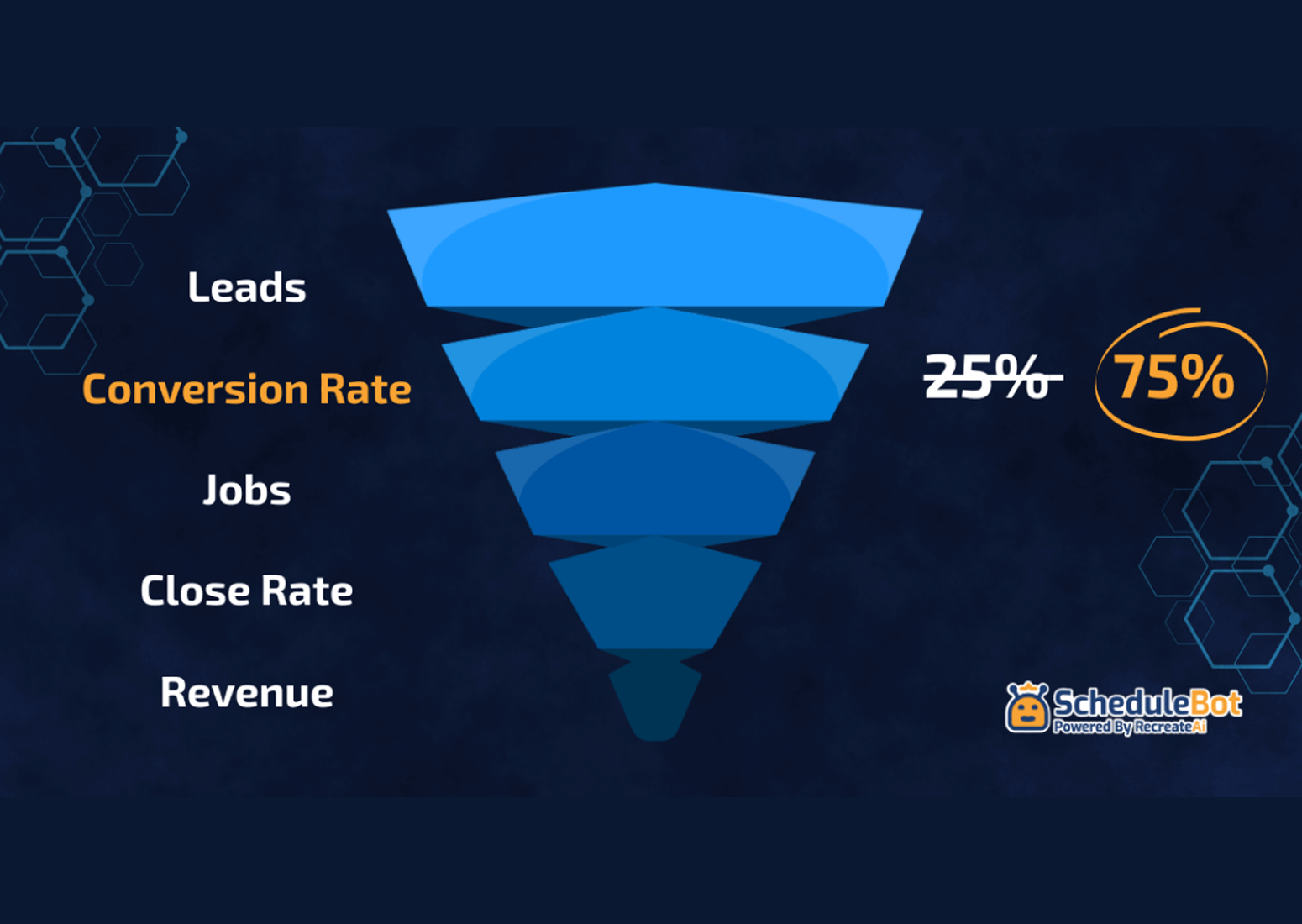
That means 70–80% of customers who click “Schedule Now” never become booked jobs.If you’re paying for traffic, that is a serious revenue leak.
This article explains:
In the home service industry:
Most traditional online scheduling tools were built to collect leads, not maximize conversion. That difference matters.
There are five major reasons most online schedulers convert poorly.
Many online scheduling tools use basic forms that:
Customers drop off because the process feels like work.
High-intent customers want speed and clarity.
There are five major reasons most online schedulers convert poorly.
Traditional schedulers often:
This creates friction and uncertainty.
When the process feels unclear, conversion drops.
One of the biggest hidden problems with online scheduling is abandonment.
A customer may:
Most schedulers do nothing with partial information.
That lead is gone.
There is no follow-up.
No reminder.
No recovery.
Traditional online schedulers are passive.
They wait for the customer to complete the process.
They do not:
Modern consumers expect conversational guidance.
If they do not get it, they leave.
Over 80% of home service traffic is mobile.
Many schedulers:
Mobile friction kills conversion.
Let’s break down the math.
That’s 40 additional jobs.
If your average ticket is $1,000:
Per 100 scheduling attempts.
If you generate 400 online attempts per month, the gap becomes massive.
This is why improving online scheduler conversion often has more impact than increasing ad spend.
Here are the core improvements high-performing companies implement.
High-converting booking systems:
Instead of static forms, they behave like a trained CSR.
The best booking systems:
This alone can significantly increase booking rate.
Conversion improves when you:
The easier it feels, the higher the completion rate.
When scheduling connects directly to your CRM:
Integration reduces operational hesitation.
Online scheduling does not exist in isolation.
High-performing companies combine:
This protects every touch point.
If someone prefers to call instead of finishing the form, the system still converts.
For a full breakdown of how AI booking software improves conversion, see our complete guide to AI booking for home service companies.
Traditional Online Scheduler
AI Booking Software
The difference is not cosmetic.
It is structural.
Common causes include friction, lack of logic adaptation, no follow-up, and poor mobile design.
When static forms are replaced with intelligent, guided booking systems, significant improvements are possible.
In many cases, yes.
Improving conversion produces more revenue without increasing marketing spend.
Most companies try to solve low booking rates by:
But the bottleneck often sits inside the booking process.
If your online scheduler converts 30% and competitors convert 60% or higher, they win with the same traffic.
The fix is not more leads.
The fix is better booking performance.
If you are generating online demand but only converting a small percentage into scheduled jobs, your online scheduling system may be the weakest link in your operation.
Improving online scheduler conversion rate can:
The highest leverage move in home services is not always generating more demand.
It is capturing more of the demand you already have.